The idea is used by campaigns, party organizations, advocacy groups and nonprofits. It helps a team decide what to ask each person, and it shows where supporters stop moving forward. This guide explains how to design a ladder, gives example ladders for a campaign, a nonprofit and a ballot question committee, and shows how pipeline stages in a CRM can serve as the ladder, so you can see who is on each rung.
The rungs of a typical ladder
Every organization's ladder is different, but most follow a similar pattern. The table below is an example, not a standard.
| Rung | What the person has done | The next ask |
|---|---|---|
| Signed up | Gave their contact details and asked to hear from you | Come to an event or a meeting |
| Attended | Came to an event, a meeting or a training | Take one volunteer shift |
| Volunteered | Took a shift, such as doors, phone calls or event setup | Take shifts regularly, or bring a friend |
| Regular volunteer | Volunteers often and brings others | Lead a small team |
| Leads a team | Recruits, trains and supports other volunteers | Help plan the next campaign |
Each rung is defined by something the person has done, not by how they feel. "Attended one event" can be checked. "Interested" cannot. Defining rungs by actions makes the ladder something your whole team can apply the same way.
A ladder belongs in the same place as the rest of your contact records. Our guide to choosing a CRM for political campaigns explains how one record per person holds a supporter's events, door results and texts, and the ladder is one more way of reading that record.
How to design your own ladder
An example ladder of engagement, as pipeline stages
- 01Signed upGave contact details and asked to hear from you
- 02AttendedCame to an event or a meeting
- 03VolunteeredTook a shift, such as doors, calls or event setup
- 04Leads a teamRecruits and supports other volunteers
Not active Kept on the record with the date of the last step, so the next ask fits where the person stopped.
Start from the work your organization needs done, then work backward to the steps that prepare someone for it.
- List the roles you need. Canvassers, phone callers, event hosts, drivers, data entry volunteers and team leaders are common examples. The top rungs of your ladder should match the roles you need most.
- Keep each step small. The gap between one rung and the next should be one manageable ask. A person who has only signed up is unlikely to agree to lead a team, but many will agree to attend one event.
- Define each rung by an action. Write down what a person must have done to be on each rung, so two people on your team would place the same supporter on the same rung.
- Decide the next ask for every rung. For each rung, write the one ask you will make of people on it.
- Keep the ladder short. Four to six rungs are enough for most local campaigns and small organizations. A ladder with too many rungs is hard to track and hard to explain to volunteers.
- Write it down and share it. Everyone who talks with supporters should know the rungs and the next ask for each.
Example ladders
The three examples below show how the same idea fits different organizations. Each is an illustration to adapt, not a rule.
A local campaign
- Signed up on the website or at the door.
- Took a yard sign or attended a meet-and-greet.
- Knocked doors or made calls for one shift.
- Volunteers every week.
- Captains a precinct or leads a phone team.
A small nonprofit
- Subscribed to the newsletter.
- Attended a volunteer orientation or a community event.
- Volunteered for one shift.
- Volunteers monthly or serves on a committee.
- Leads a program or recruits other volunteers.
A ballot question committee
- Signed a pledge of support.
- Attended a forum or an information session.
- Talked with neighbors or helped at an event.
- Hosted a house meeting.
- Leads outreach in a neighborhood or for a partner group.
The steps above use general examples. Before you text supporters as part of any step, make sure each person agreed to receive texts, and keep the date and source of that agreement on their record.
Helping people take the next step
A ladder only helps if someone makes the next ask. These habits keep people moving:
- Ask directly. A personal ask from an organizer or a volunteer leader works better than a general announcement. People asked by someone they know often respond, which is why many organizations pair the ladder with relational organizing.
- Thank people after each step. A short thank-you after an event or a shift makes the next ask easier.
- Follow up while the last step is recent. Ask for the next rung soon after the person takes a step, while the experience is fresh.
- Let people start higher. An experienced volunteer from another campaign does not need to start at the bottom. Place each person on the rung that matches what they have done.
- Expect people to step back. Volunteers change jobs, relocate and take breaks. Record when someone stops taking steps, and make a smaller ask when you contact them again.
- Watch for the rung where people stop. If many supporters attend events but few volunteer, the ask between those two rungs may be too large, or no one may be making it.
Using pipeline stages as a ladder of engagement
Track the ladder on each person's record. In CoreCNX, a pipeline is a board of stages that your organization names, and the stages can be the rungs of your ladder:
- Name one stage for each rung. For example: signed up, attended, volunteered, regular volunteer and leads a team. An account has one set of pipeline stages, so decide before you start that the stages will describe the ladder.
- Move each person when they take a step. Your team drags the person to the next stage, or moves many people at once. Each move is recorded on the person's timeline with its date, so you can see when someone climbed and how long ago they last moved.
- See who is on each rung. Filter the contact list by stage to see everyone on a rung, then export that group as a CSV file or add a tag for the next ask. Reports show how many people are in each stage and how long they stay there.
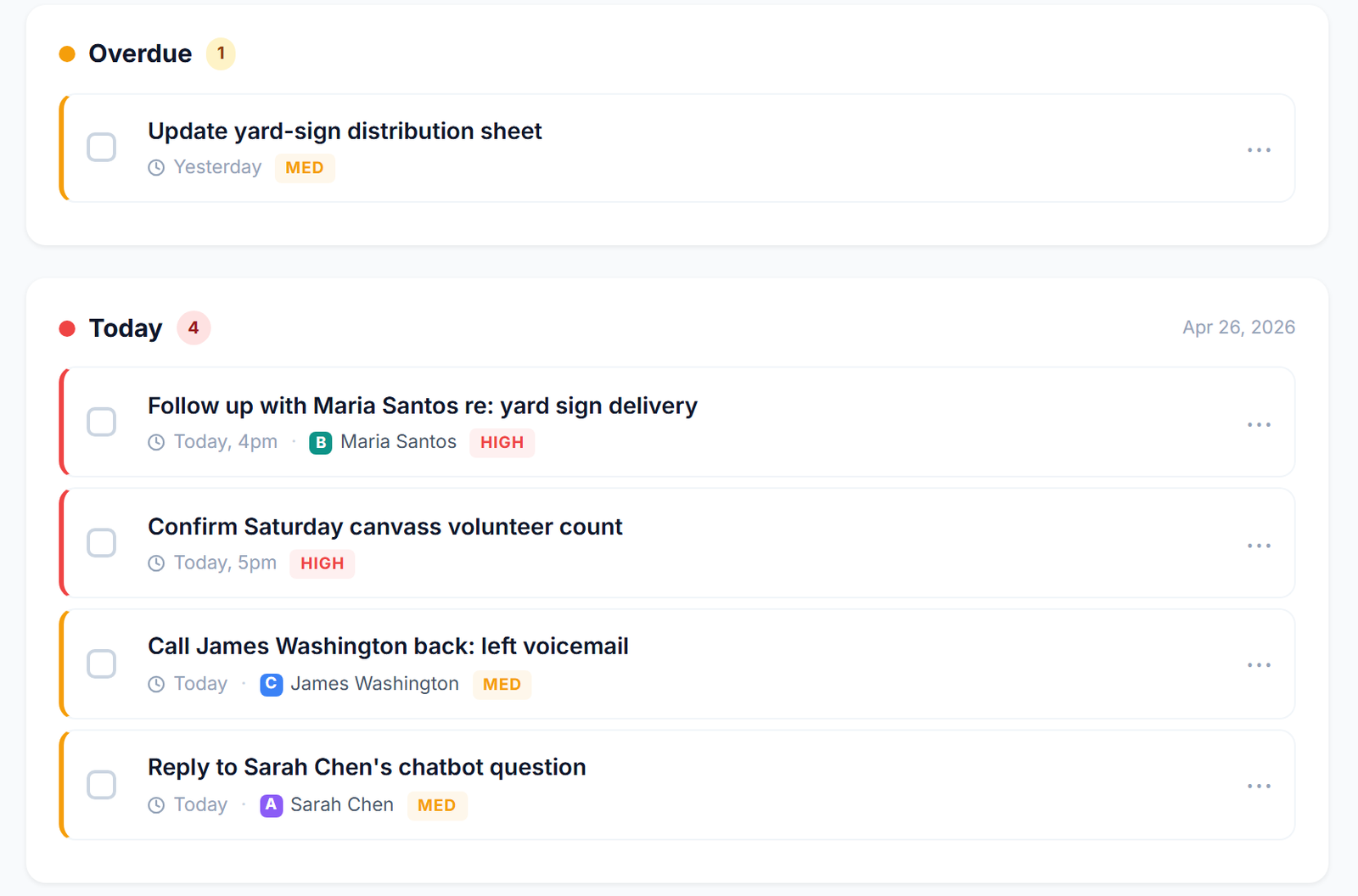
- Set the next ask as a task. Add a task with a due date and the teammate responsible, such as "invite to Saturday's canvass."
If you use the CNX Suite, other activity appears on the same timeline. Door results from Beacon and texts and replies from CampaignCNX+ are added to the person's record, and a supporter who texts a keyword you have set up, such as VOLUNTEER, has that keyword and your automatic reply recorded too. Your team then decides whether the person has reached the next rung and moves them. Our page on CoreCNX for political campaigns shows how the pipeline fits with the rest of a campaign's records.
Measuring your ladder

Once the ladder is in use, a few simple counts show how it is working:
- How many people are on each rung. Count them at the start of each month and compare.
- How long people stay on a rung. A long wait on one rung usually means the next ask is missing or too large.
- How many people moved up this month. This is the clearest sign that your team is making the next ask.
Small nonprofits can use the same measures for volunteers and members. Our post on what a small nonprofit needs from a CRM covers the rest of the records a nonprofit keeps.
Common questions
Is a ladder of engagement the same as a sales funnel?
They are similar. Both describe the steps a person takes toward a larger commitment. A ladder of engagement focuses on the next ask for each person and on supporters taking on more responsibility over time, often for years.
How many rungs should a ladder have?
Four to six rungs work for most organizations. Fewer rungs can leave large gaps between asks, and more rungs are hard to track.
Can a person skip a rung?
Yes. Place each person on the rung that matches what they have already done. The ladder is a guide for the next ask, not a requirement to complete every step in order.
Start with the rungs you can name today
Write down four or five rungs, name the next ask for each, and place your current supporters on them. Start a 14-day CoreCNX trial, set up the rungs as pipeline stages, and see where your supporters stand.